Developer: Paradigm Entertainment Publisher: Nintendo
Released: September 29, 1996 Rated: E 7/10
Pilotwings returns in 3D to show off the new tech like it did so successfully in the 16-bit era. With analog stick control and wide open 3D environments to explore, Paradigm has their work cut out for them, though perhaps Mario handles a bit more legwork when it comes to players grappling with the new controller.
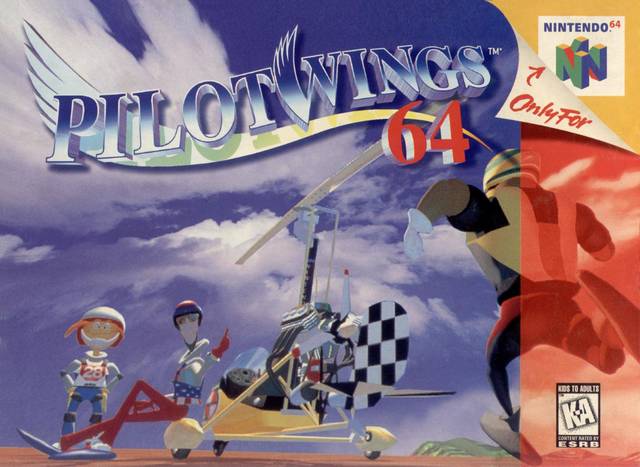
The premise isn’t particularly complicated in Pilotwings — much like the first title, there are a few aeronautical vehicles to master as you take on various challenges to show off your talents. Earn medals for conquering each mission to unlock the next round of challenges, shoot for high scores and perfect runs, and take time in between to try bonus games with more unusual methods of flight. Your main sets of challenges concern the hang glider, gyrocopter, and jet pack, while bonus modes include skydiving, human cannonball, jumble hopper (spring-loaded boots), and Birdman suit.

No doubt the vehicles all handle distinctly, and each comes with a good amount of weight and resistance that feels good when you hone in on the right way to handle them. The same can’t be said for the individual pilots, who look distinct from one another and have decent designs, but are tough to differentiate despite the game claiming that they have individual strengths. Missions take place across a variety of small, distinct islands with a smattering of identifying features and zones. The whole setup feels like a bit of a precursor to the exploration based flight mode from Wii Sports Resort and its vast, well-populated Wuhu Island. Pilotwings may not have the intricacies of that gameplay mode (though it does have photography), but it’s something analogous for the hardware it’s on and the landmarks like a Mario-faced Mount Rushmore and a beachside carnival make for a game world that’s just pleasant to be in.

Pleasant is definitely the word, not just for the gameplay and the setting, but for quite possibly the best part of Pilotwings 64: the music. Dan Hess’s soundtrack is a unique one in the world of games with its blend of yacht rock synth, funky bass, jazzy winds, and all-around groovy compositions. There’s only about 40 minutes of music in the whole game, but a number of candidates for background music that can be played on repeat for hours. The Birdman theme in particular is an all-time classic of game music that doesn’t sound anything like game music because, of course, Pilotwings shares so little DNA with most other games via its lack of conflict or intensity that the music can’t follow the lead of anything else in the medium.

The real complaint about Pilotwings 64 is just that it’s kinda short and, while it’s certainly good at what it wants to do, a significant number of people will probably find it pretty dull. The pace of most events is on the slower side, the length is held up by repeated attempts needed to get over the difficulty curve, and the need to highlight the technology has evaporated over time. But there’s still an effectively executed concept here that does its job, and really good for a nice, chill afternoon playthrough.
Continuing Legacy
Pilotwings as a franchise would serve its purpose as a tech demo one more time with Pilotwings Resort on the 3DS, probably the hardware that needed an effective tech demo the most outside of the Wii. As mentioned, though, the franchise shares a lot of DNA with Wii Sports Resort, which brought back both skydiving and the casual flight game modes for its Wuhu Island setting and the Wii MotionPlus attachment. It’s unlikely that Pilotwings will come back any time in the future, but the purpose it serves is still a key part of Nintendo’s approach to hardware.
Additional Information
Saves: Cartridge
Compatible With: None
Players: 1
Print Guides: None
Aggregate Critical Reception (GameRankings): 87.21%, based on 8 reviews
Other Releases: JP, June 23, 1996
EU, March 1, 1997
My Streams
Commercials and Print Ads

One response to “Pilotwings 64”
[…] Pilotwings 64 […]