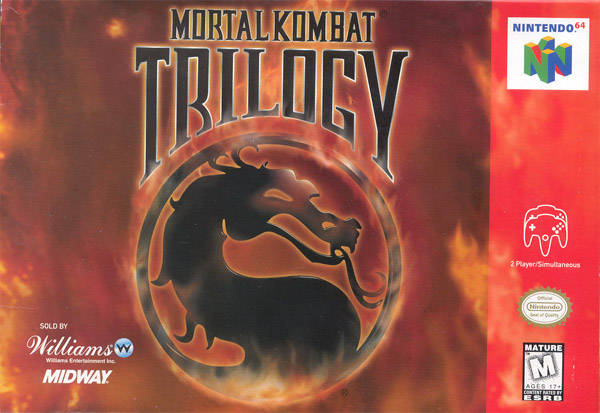
Developer: Williams Development Publisher: Williams
Released: November 12, 1996 6/10 Rated: M
Old, 2D era Mortal Kombat is always tough to talk about. It has something akin to “sacred cow” status as an all-time classic and historically significant, era-defining franchise. But the appeal has always been in spectacle and originality, while the likes of Street Fighter, Fatal Fury, and others carried the flag for polish, mechanics, and control. The term “jank” practically originated with Mortal Kombat, and it’s why we still use it with fighting games in particular. So many games with touchy controls, awkward but interesting mechanics, and just general imperfections that can still be saved with good design. Just a good ol’ janky time can really hit the spot sometimes.
When it comes to where we are in the history of Mortal Kombat, once we hit Mortal Kombat Trilogy, it’s sort of a case of two opposing ideas. Whereas MKII is often considered the peak of the arcade era of Mortal Kombat, MK3 saw the bloom starting to come off the rose a little. Post-match fatalities and other moves continued to proliferate, characters became more hit and miss, and as the genre got more and more heavy hitters by the mid-‘90s, the shortcomings of the gameplay started to become more noticeable. Oh, and they forgot Scorpion. Vanilla MK3 gave way to Ultimate MK3, which restored the series’ most popular character and improved the game’s batting average a smidge while capping off the fourth generation of consoles with its ports. And now we open the fifth generation with MK Trilogy, offering up every character in the series’ roster up to that point, including bosses, as well as a few new partly-covered faces in Rain and Khameleon (a female shape-shifting ninja, exclusive to the N64 version, while other versions have the male Chameleon).
Unfortunately, it’s also here that the N64 versions are lacking, even though one of the persistent issues with Trilogy as a whole is that there’s no version without at least some omissions. There are classic versions of characters like Raiden and Baraks that bolster the already complete roster but are only found in the PS1 and Saturn versions. It’s not the best trade-off for offering 3-on-3 matches and no load times, nor is it all that great for no version to have the full wealth of stages. The N64 also lacks in the audio department both in quality and quantity, compared to the CD-based consoles, to the surprise of no one, I’m sure.
Trilogy also makes a few minor tweaks to the gameplay as a whole, though nothing major that makes it terribly different from the foundation of MK3. The “Aggressor” bar that grants a short power and speed boost is featured here and doesn’t stick around, as well as the new post-match spectacle of the Brutality, which is still going strong. That’s really all to discuss for new features, otherwise Trilogy would stand on its own as the next entry and not version 3.3. The 3D transition of the franchise was still a few years and a few test runs away, but we got a decent send-off for the franchise’s early years, similar to the one Armageddon gave it a generation later.
Continuing Legacy
In spite of inspiring and defining jank to a generation of fighting game fans, the Mortal Kombat franchise has experienced a complete renaissance since its 2009 reboot on PS3 and Xbox 360. The franchise may not stand toe-to-toe with some other competitive fighting franchises, but its gameplay and storytelling have both matured greatly in spite of its cheesy, shlocky beginnings.
Additional Information
Saves: None (Any unlockables, cheat menu, or other features are accessed with passwords)
Compatible With: None
Players: 1-2
Print Guides: Prima, BradyGames, GameFans, Electronic Gaming Monthly
Aggregate Critical Reception (GameRankings): 53.60%, based on 7 reviews
Other Releases:
My Streams
Commercials and Print Ads