Developer: Rare Ltd. Publisher: Nintendo
Released: November 25, 1996 Rated: T 7/10
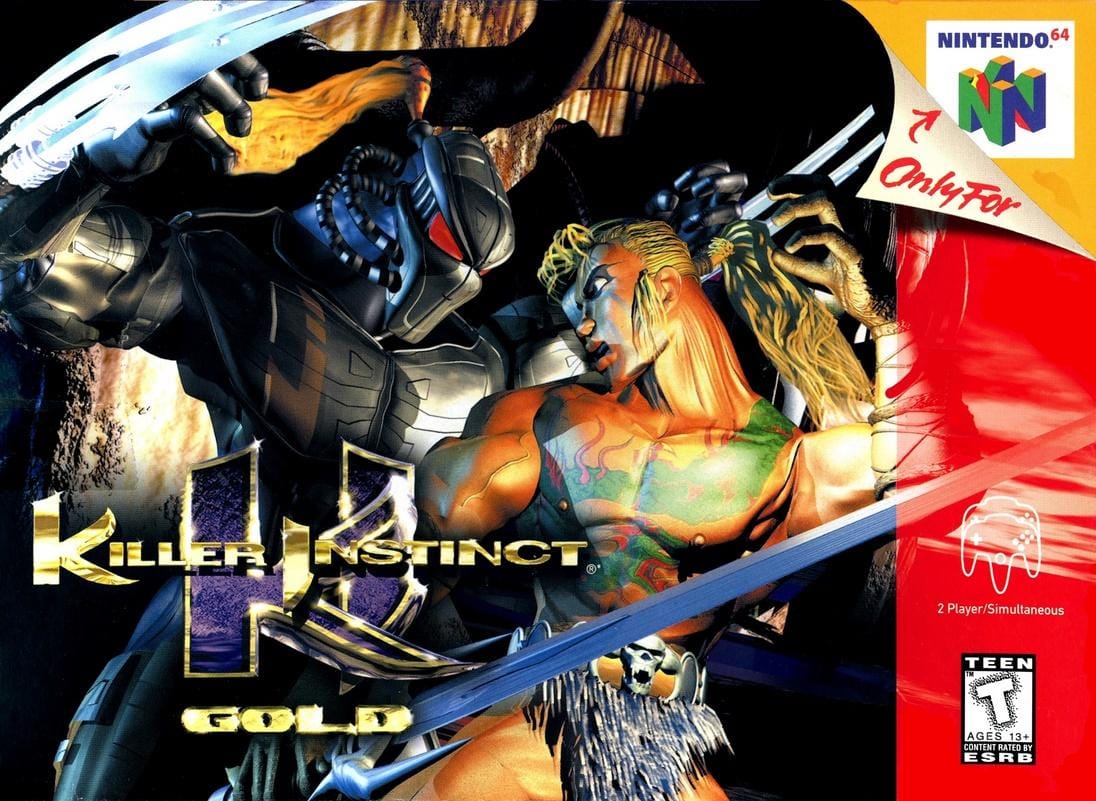
Alongside Cruis’n USA, Killer Instinct Gold was one of the N64’s earliest releases that faced a lot of disappointment on release as an arcade port that simply underwhelmed. Hype building and previewing for a home port of Killer Instinct 2 date back to the beginning of 1996 when the system was drawing nearer to release. And while it’s far less compromised than Cruis’n or the SNES port of the first Killer Instinct, the expectations of a new console meant that any less-than port would feel like a letdown, particularly in the eyes of professional reviewers at the time.
For the uninitiated, Killer Instinct could be best described as one of the mid-’90s Mortal Kombat clones that actually worked. Its success should be no real surprise, given the team at Rare’s remarkable talents that were really starting to come into view in their post “paying our dues on licensed NES games” era. With over-the-top characters, intense violence and special moves (albeit with a T-rated ceiling), a distinctively intense announcer, and a graphical style based on digitized character sprites, the similarities to Mortal Kombat are clear, though gameplay is heavily focused on combos, and gets a lot more intricate because of this approach.

Killer Instinct Gold ultimately missed its launch date of a day one release for the N64, as did many other promised titles, but still slotted into the launch window and made it out by holiday ‘96, giving early adopters a second fighting game option in a slim lineup of games that also featured, coincidentally, Mortal Kombat Trilogy. The lineup of characters including swordsman skeleton Spinal, lycanthrope Sabrewulf, and ice warrior Glacius is one of the game’s top features, as they form an excellent roster that is distinct, intriguing, and, surprisingly, has aged well in spite of their somewhat schlocky and campy design. It’s tough to look at a character like Maya, an Amazonian warrior princess, and not find something you’d do differently in a modern context, but it’s really not bad, and not a character you’d avoid picking because her design represents the game poorly. It’s also very easy to imagine every character being somebody’s favorite, which is a total rarity in any fighting game. They all offer a very distinct design, moveset, and attitude and there isn’t any one of them that I would consider low tier, at least in terms of visual design and concept. The only disappointment in the character roster – one of the key features of a fighting game – is that Cinder, Chief Thunder, and Riptor from the original game have not returned, leaving the roster at 11, the same as the first and still a little slim.

Along with character design, Killer Instinct Gold also looks pretty good overall with its animations and backgrounds. Though one of the biggest complaints about the port was that it was missing both animation frames and full motion videos from the arcade version, the former is mainly only noticeable side-by-side, while the latter is no real surprise given the hardware. This is also less of a big deal for players nowadays, I imagine, as though the cutscenes look nice, showing off tech that didn’t have to do with gameplay was far more important back in 1996. Pre-rendered backgrounds are diverse and look great – a use for the style that I think has aged particularly well, rather than having to interact with them – and animations for special moves and combos are snappy and fluid enough even without the extra frames of the arcade. Music is, like the first, game, consistently excellent, however, as another soundtrack by Robin Beanland brings heavy, industrial-inspired themes to the forefront again. The fact that this soundtrack once again received a Western CD release was certainly warranted, and the style absolutely previews upcoming compositions by Beanland and Graeme Norgate for titles like Blast Corps and Goldeneye 007.

The N64 port also comes with a very welcome training mode that will certainly be appreciated for those who need time and practice to wrap their heads around what the game calls “combo theory.” It’s as intricate as it sounds and while memorizing lots of sequences might not be everybody’s cup of tea for a fighter nowadays, connecting with a decent number of hits, even by accident, is still quite satisfying, especially when accompanied by the intense roar of the announcer and a big chunk off your opponent’s life bar. Killer Instinct Gold may not be as demonstrative of a growing fighting game genre that would flourish in the final golden days of arcades and on the Playstation, but it’s still one of the better fighters for the style it exemplifies. The fact that the SNES port of the first Killer Instinct was so well-received, while this port of the second was received more coldly speaks more to a changing trend than a lesser product. With higher expectations and a different outlook on what the N64 should do, Killer Instinct Gold felt like it was behind the times and not worthy of a new system’s release, but like a lot of titles, the new hardware makes this a good version of a series people do often want to revisit.
Continuing Legacy
Killer Instinct entered into a state of hibernation following this entry, beginning an all-time run of amazing titles on the N64 that you could say started here, though the truly tip-top tier of titles would begin the following summer with Goldeneye. Their acquisition by Microsoft led to a continued dormancy for most of their franchises through the 2000s, but Killer Instinct would eventually be rebooted with full Mortal Kombat-killer gusto as part of the Xbox One’s launch in 2013. Headed by original series co-creator Ken Lobb, Killer Instinct (2013) was certainly a success and a solid exclusive for the system throughout its lifespan, even though it launched as a free-to-play title with recurring “seasons” of content drops that added new characters and features, rather than being a finished product at the start. This is in no way a direct condemnation of the game itself, which is very good all around, but it feels important to note, particularly on a retro website, that Killer Instinct was specifically rebooted as an embodiment of the modern gaming service approach.
Additional Information
Saves: Cartridge
Compatible With: None
Players: 1-2
Print Guides: Electronic Gaming Monthly (Killer Instinct 2), Gamefans (Killer Instinct 2), Prima
Aggregate Critical Reception (GameRankings): 74.37%, based on 10 reviews
Other Releases: AU, May 9, 1997
EU, July 4, 1997
My Streams
Commercials and Print Ads


One response to “Killer Instinct Gold”
[…] Killer Instinct Gold […]